Cleaning a Medical or Industrial Facility: Why Cleaning and Sanitizing Are Two Separate Steps
Wiping a surface and disinfecting it are two different jobs done in a specific order, and the sequence of rooms in a medical or industrial facility matters as much as either one.
September 15, 2026 · 3 min read
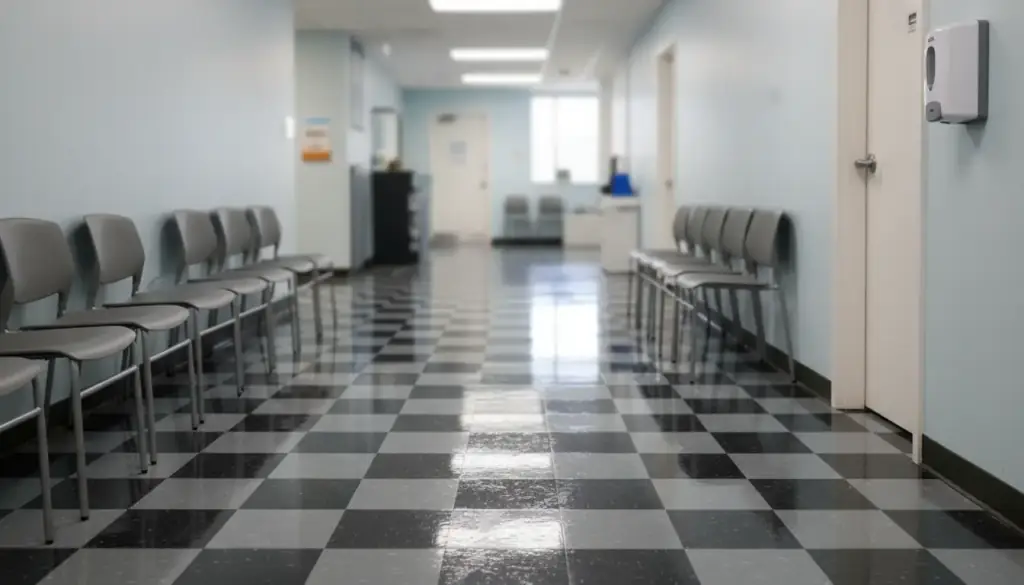
In a clinic, dental office, or industrial facility, 'clean' and 'sanitized' get used almost interchangeably in casual conversation, but they're two separate steps done in a specific order, and skipping or reversing that order is one of the more common ways cleaning falls short of what a medical or industrial space actually needs.
Cleaning and sanitizing are two steps, not one
Cleaning removes visible soil, debris, and organic material from a surface. Sanitizing or disinfecting comes after, and it's aimed at what's left behind once the visible dirt is gone. The reason the order matters is straightforward: a disinfectant working on a surface that still has soil on it is spending its contact time breaking down grime instead of doing what it's actually there for. Soil comes off first, every time, or the second step isn't accomplishing what it's supposed to.
Different rooms, different standards
A waiting room, a bathroom, and an operating room are not equivalent spaces, even though all three are technically 'inside the same building.' A waiting room needs regular touchpoint cleaning of chairs, counters, and door handles. A bathroom needs a higher standard applied to fixtures and floors on every visit. An operating or procedure room carries the highest standard of all, with a stricter process and stricter attention to every surface a patient or instrument might contact. Treating all three the same way, just because they're all 'medical facility cleaning,' misses the point.
Cross-contamination is a sequencing problem
The order rooms get cleaned in isn't incidental, it's part of the process. Moving from a lower-risk area into a higher-risk one, and not carrying soil, mop water, or cloths from one room into the next, is what keeps a cleaning visit from spreading contamination instead of removing it. That means using separate or properly changed equipment between rooms, and cleaning in a deliberate sequence rather than whichever order is fastest to walk through the building.
A range of facilities, a range of surfaces
Medical facility cleaning covers more ground than a single hospital floor plan. Dental offices, veterinary clinics, dialysis centers, walk-in clinics, eye care offices, and emergency facilities each have their own mix of surfaces, equipment, and traffic patterns, and each one deserves a process built around what that specific facility actually contains rather than a single checklist applied everywhere. The same discipline applies on the industrial side, where OSHA-certified cleaning has to account for concrete floors, handrails, safety lines, and equipment rather than the finished surfaces a clinic has.
Separate tools for separate rooms
In facilities where cross-contamination is a real concern, many cleaning programs use separate tools, cloths, or mop heads dedicated to specific room types rather than moving the same equipment from a bathroom into a waiting room or a procedure area. It's a simple practice, but it's the kind of detail that's easy to skip when a cleaning visit is being rushed, and it's one of the clearer signs of whether a facility's cleaning is actually built around infection control or just built around finishing quickly.
Industrial facilities carry their own version of this problem
The same sequencing discipline applies on a plant floor, just with different hazards. Moving from a clean area into one with chemical residue, or tracking material from a loading dock into finished production space, is the industrial equivalent of carrying soil from one clinic room into the next. OSHA-certified industrial cleaning accounts for that the same way medical facility cleaning does, by thinking about the order surfaces get touched, not just the surfaces themselves.
Cleaning Solution Services is OSHA certified for both industrial cleaning and medical facility cleaning, and IICRC certified, and works across waiting rooms, break rooms, operating rooms, and bathrooms in dental, veterinary, dialysis, walk-in, and hospital settings, along with plant floors and industrial facilities. Estimates on cleaning services are free, and the office can be reached at (920) 749-2700.
Cleaning Solution Services, Inc., (920) 749-2700
Call (920) 749-2700More articles
VCT, Terrazzo, Epoxy, or Polished Concrete: The Floor Decides the Process
Four floors that can look alike from the hallway need four different processes, and running the wrong one is the fastest way to damage a floor a building has had for years.
Strip and Wax or Scrub and Recoat: How to Tell Which One Your Floor Is Due For
A dull floor doesn't automatically need a full strip. Knowing the difference between a full restoration and routine maintenance can save a building a strip cycle it doesn't need yet.