VCT, Terrazzo, Epoxy, or Polished Concrete: The Floor Decides the Process
Four floors that can look alike from the hallway need four different processes, and running the wrong one is the fastest way to damage a floor a building has had for years.
September 15, 2026 · 4 min read
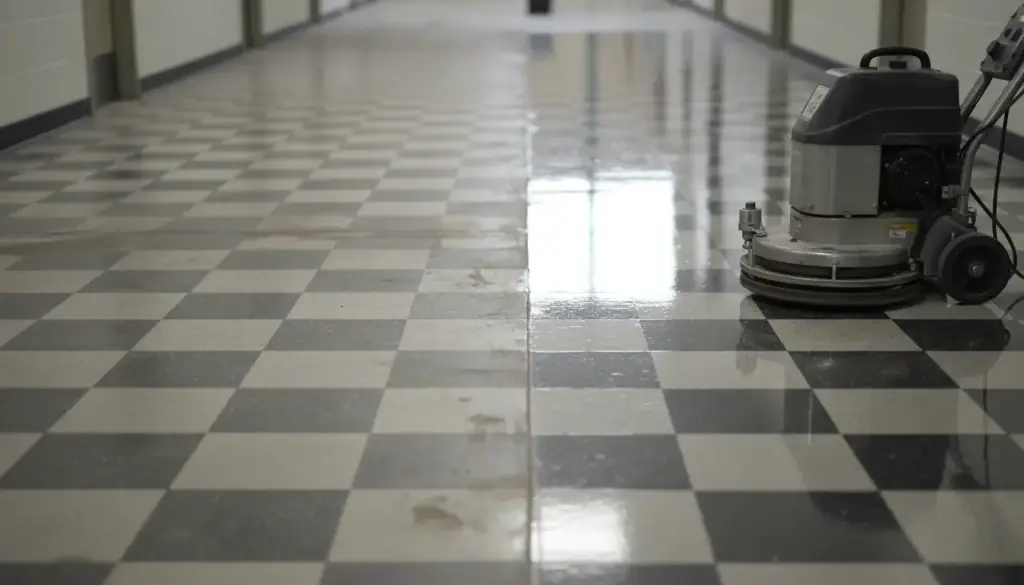
If you manage a building long enough, you eventually get two floor care bids for the same floor that describe completely different jobs. One contractor wants to strip and wax it. Another wants to polish it. A third wants to scrub and recoat it. They can't all be right, and the difference usually isn't a matter of opinion. It comes down to what the floor is actually made of, because VCT, terrazzo, epoxy, and polished concrete each call for a different process, and running the wrong one on the wrong floor is one of the more common ways a facility loses a floor it should have had for another decade.
VCT is built to be stripped and refinished
Vinyl composition tile is the classic corridor and lobby floor, and it's designed around being stripped down to bare tile and built back up with coats of floor finish. The old finish and the soil embedded in it come off with a stripping chemical, the bare tile gets rinsed and neutralized, and new finish goes down in thin, even coats. That finish layer is what actually takes the traffic. It's the sacrificial part of the floor, which is exactly why it can be stripped and redone without touching the tile underneath.
Terrazzo and polished concrete are polished, not waxed
Terrazzo and concrete work the opposite way. There's no separate finish coat sitting on top to strip off, because the shine comes from the material itself. Both get ground and polished in stages with progressively finer diamond abrasives until the surface reflects light on its own. Put a wax finish on either one and you get a cloudy film that traps moisture underneath, and before the floor can be honed properly again, that wax has to be stripped back off, which is extra work and extra cost that a strip-and-wax bid never should have created in the first place.
Epoxy and painted floors get scrubbed, not stripped
Epoxy coatings and painted floors already have a hard, sealed surface, and that's the part a standard floor stripper is designed to dissolve. Run a VCT-grade stripping chemical across an epoxy floor and it will attack the coating itself, not just the dirt sitting on it. These floors are maintained by scrubbing with the right pad and detergent, and recoating on a schedule when wear starts to show through, not by stripping them back to bare substrate.
Why the wrong process is the expensive mistake
Most of the damage we see on commercial floors traces back to one process being run on the wrong material. Stripping chemical left too long on terrazzo etches the grout lines and dulls the aggregate. Wax finish applied over epoxy peels and flakes within weeks because it never bonds properly. Aggressive polishing pads meant for concrete will scratch VCT instead of shining it. None of these are dramatic failures on day one. They show up months later as a floor that looks worse than it did before the 'fix,' and by then the repair is bigger than the original job would have been.
Ceramic and carpeted floors follow their own rules too
Ceramic tile behaves a lot like VCT in that the grout lines need protecting from stripping chemical, and porous tile can absorb a chemical left sitting too long, so timing and a thorough rinse matter more than they do on sealed vinyl. Carpeted areas in the same building are a different category of floor care entirely, cleaned rather than stripped or polished, and worth planning on its own schedule instead of folding it into a hard-floor quote where it doesn't really belong.
What to ask before the crew shows up
If a building has more than one floor material, which is common once you count a terrazzo lobby, VCT corridors, and an epoxy-coated loading area under one roof, a single floor care visit is really three different jobs happening under one contract. It's worth asking a contractor to name the process planned for each material specifically, rather than accepting a single line item that just says 'floor care' for the whole building.
- Which process is planned for each floor type in the building, not one square-footage number covering everything.
- Whether the stripping chemical planned is suited to VCT, or whether epoxy and painted areas are being scrubbed instead.
- How polished concrete or terrazzo will actually be finished, and whether any wax product is involved at all.
- Whether ceramic tile and carpeted areas are covered in the same visit or scheduled separately.
A floor care bid that names the process without naming the floor type isn't really a bid yet. Cleaning Solution Services works across VCT, tile, luxury vinyl, terrazzo, epoxy, painted flooring, and concrete, along with ceramic and carpeted floors, and estimates on cleaning services are free. If you're not sure which process your floor is actually due for, that's a fair question to start with before any work gets scheduled.
Cleaning Solution Services, Inc., (920) 749-2700
Call (920) 749-2700More articles
Strip and Wax or Scrub and Recoat: How to Tell Which One Your Floor Is Due For
A dull floor doesn't automatically need a full strip. Knowing the difference between a full restoration and routine maintenance can save a building a strip cycle it doesn't need yet.
Hot Water Extraction or Encapsulation: Choosing a Commercial Carpet Method Around an Occupied Building
One method soaks the carpet and pulls the soil out with it. The other coats it and dries in about an hour. Knowing which job you actually have decides which one is right.