Strip and Wax or Scrub and Recoat: How to Tell Which One Your Floor Is Due For
A dull floor doesn't automatically need a full strip. Knowing the difference between a full restoration and routine maintenance can save a building a strip cycle it doesn't need yet.
September 15, 2026 · 3 min read
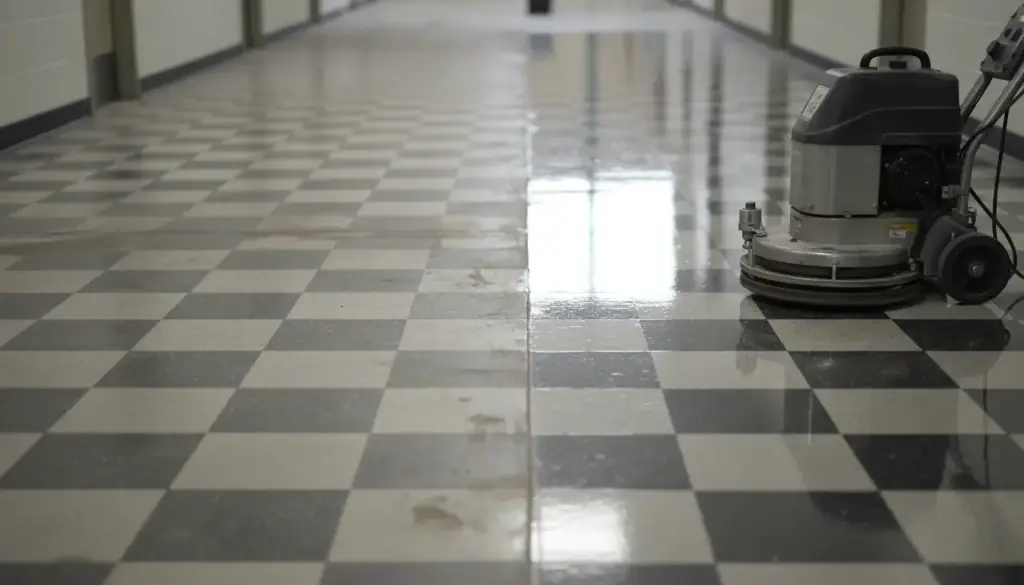
A building manager looking at a dull, traffic-worn floor usually assumes it needs a full strip and rewax. Sometimes that's true. Just as often, the floor doesn't need to go all the way back to bare tile, it just needs the top layer of finish scrubbed and a fresh coat put back down. Telling the two apart matters, because a full strip is the more disruptive and more expensive job, and running one every time a floor looks tired burns through a maintenance budget faster than it needs to.
What a full strip and wax actually involves
A strip and wax takes the floor down to bare tile. Every layer of old finish, along with whatever soil and discoloration is embedded in it, comes off with stripping chemical, and the floor is rebuilt from scratch with new coats of finish. This is the right call when finish has yellowed, gone gray with ground-in soil, or built up unevenly in layers, none of which a surface scrub can fix, because the problem is underneath the top layer, not on it.
What scrub and recoat fixes instead
Scrub and recoat is a lighter job. The top layer of worn finish gets scrubbed off with a floor machine and pad, the floor is rinsed, and one or two fresh coats of finish go down over what's left underneath. It works when the finish itself is still sound, the floor just has scuffing, traffic marks, and a general loss of gloss in the areas people actually walk. If the dullness is only skin deep, scrubbing and recoating gets the shine back without the time or cost of a full strip.
Burnishing is what stretches the gap between strips
Between strip cycles, high-speed burnishing is what actually keeps a floor presentable. A burnisher polishes the existing finish with heat and friction rather than removing it, which restores gloss to worn traffic lanes without touching the coats underneath. A floor on a regular burnishing schedule can go a lot longer between full strips than one that's left to dull down on its own, because burnishing is addressing the wear before it turns into buildup that only a strip can fix.
Reading the floor before you book the job
- Dull only in traffic lanes, rest of the floor still glossy: usually a burnish or scrub and recoat.
- Even dullness or yellowing across the whole floor, not just walked areas: usually due for a full strip.
- Finish looks cloudy or has a visible buildup of layers at the baseboards: full strip territory.
- Scuffs and scratches but the floor still has a clean reflection: scrub and recoat first.
How often burnishing actually needs to happen
How often a floor needs burnishing comes down to traffic more than anything else. An entryway or a main corridor that sees hundreds of people a day loses its shine much faster than a back office hallway, so a schedule built around actual traffic patterns gets more life out of a floor than one built around a fixed calendar date. A building with a busy lobby and a quiet back corridor often needs two different burnishing frequencies under the same contract, not one blanket schedule applied to the whole floor plan.
Why the difference matters for the budget
A full strip and wax typically costs more than a scrub and recoat, simply because it's a longer job with more chemical, more equipment time, and more labor involved to take a floor back to bare tile and rebuild it. Knowing which one a floor actually needs, rather than defaulting to the bigger job every time a floor looks tired, is one of the more direct ways a building keeps its floor care spending from creeping up year over year without the floor actually looking any better for it.
None of this needs to be guesswork on your end. Cleaning Solution Services looks at the actual floor before recommending which process it's due for, rather than defaulting to whichever job is bigger, and estimates on floor care are free. If it's been a while since anyone walked your building's floors and told you honestly which one you needed, that's a reasonable place to start.
Cleaning Solution Services, Inc., (920) 749-2700
Call (920) 749-2700More articles
VCT, Terrazzo, Epoxy, or Polished Concrete: The Floor Decides the Process
Four floors that can look alike from the hallway need four different processes, and running the wrong one is the fastest way to damage a floor a building has had for years.
Hot Water Extraction or Encapsulation: Choosing a Commercial Carpet Method Around an Occupied Building
One method soaks the carpet and pulls the soil out with it. The other coats it and dries in about an hour. Knowing which job you actually have decides which one is right.